

A fire can leave you with dozens of questions in a matter of minutes. Once the firefighters leave and everyone is safe, reality starts to set in. You look around your property and wonder what happens next. The damage may seem obvious in some areas, while other parts of the home appear untouched.
Many homeowners find themselves asking the same question: when to get a fire damage inspection?
The answer is usually sooner than most people think.
After a fire, every day matters. Smoke residue continues settling onto surfaces. Water used to extinguish the flames can create moisture problems. Hidden structural damage may exist behind walls or above ceilings. Delaying an inspection can allow small issues to become larger restoration projects.
If you’re feeling overwhelmed, you’re not alone. Most people never expect to deal with fire damage. It can be stressful trying to understand insurance requirements, restoration timelines, and safety concerns all at the same time.
At Tradewinds Restoration, we’ve worked with homeowners throughout Irvine who faced these exact situations. Our team understands what happens after a fire, what inspectors look for, and how early action can help reduce repair costs and recovery time.
In this guide, you’ll learn:
- When to get a fire damage inspection
- Why timing matters
- The fire inspection timeline homeowners should know
- The first steps after house fire damage
- What happens during the post fire inspection process
- How inspections support fire restoration planning
- Why an emergency fire damage assessment can protect your property
Let’s start with the most important answer.
When to Get a Fire Damage Inspection
The best time to schedule a fire damage inspection is as soon as the property is safe to enter and local authorities allow access.
For most situations, this means scheduling an inspection within the first 24 to 48 hours after the fire.
Many homeowners assume they can wait a week or two before evaluating the damage. During that time, several issues may continue developing.
These include:
- Smoke contamination spreading deeper into materials
- Water damage from firefighting efforts
- Mold growth caused by trapped moisture
- Corrosion of metal surfaces
- Lingering odors becoming more difficult to remove
An early inspection helps identify these concerns before they become more expensive to address.
Why Timing Matters After a Fire
Fire damage does not stop when the flames are extinguished.
Several types of damage continue affecting the property afterward.
Smoke Damage
Smoke particles settle onto surfaces throughout the home.
They can affect:
- Walls
- Ceilings
- Furniture
- Electronics
- HVAC systems
The longer residue remains, the harder it becomes to remove completely.
Water Damage
Most fires require water to extinguish.
That water often soaks into:
- Drywall
- Flooring
- Insulation
- Cabinets
This moisture can spread throughout the property.
Our article on Early Signs of Water Damage in Walls (What Homeowners Should Look For Before It Gets Worse) explains how hidden moisture can continue causing damage after the initial event.
Mold Growth
Moisture left behind after firefighting efforts can create ideal conditions for mold.
Many homeowners are surprised by how quickly mold can begin developing.
Our guide How Long Can Mold Grow Before You Notice It? A Timeline Every Homeowner Should Know explains why rapid action matters.
Fire Inspection Timeline: What Happens First?
Understanding the fire inspection timeline helps homeowners feel more prepared.
Within the First 24 Hours
During the first day:
- Property access is evaluated
- Immediate safety concerns are identified
- Emergency stabilization may begin
- Documentation starts
This is often the ideal time for an emergency fire damage assessment.
Within 48 to 72 Hours
Inspectors typically begin evaluating:
- Structural integrity
- Smoke contamination
- Water intrusion
- Electrical systems
- HVAC systems
The goal is identifying both visible and hidden damage.
First Week
Once the inspection is complete:
- Restoration plans are developed
- Insurance documentation is prepared
- Cleanup priorities are established
Early planning often speeds up the recovery process.
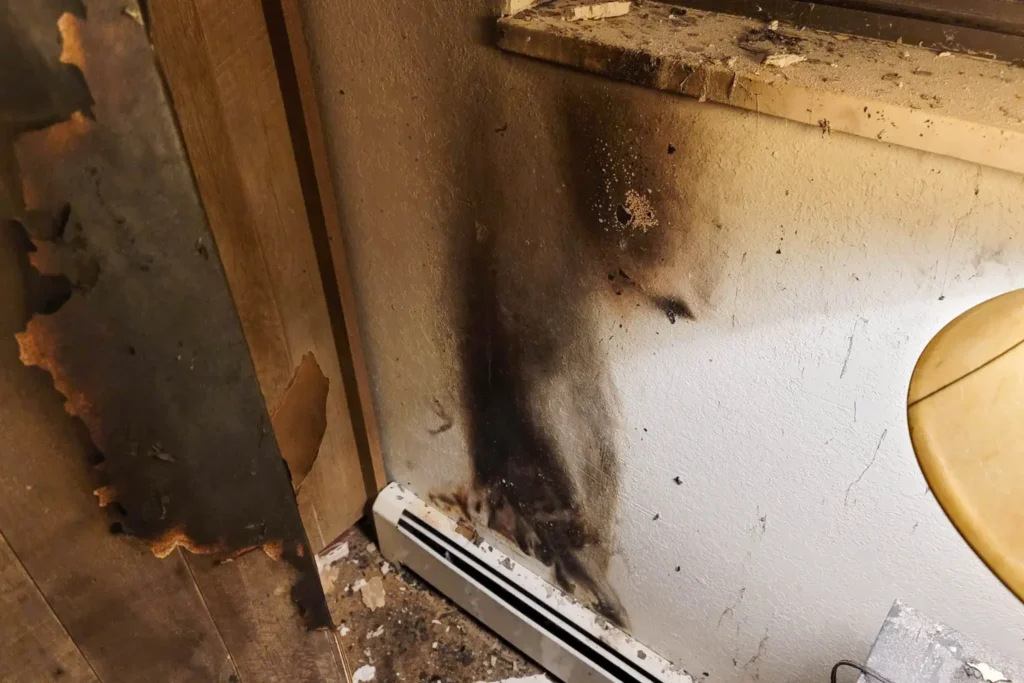
First Steps After House Fire Damage
Many homeowners aren’t sure what to do immediately after a fire.
The first steps after house fire damage should include:
Confirm Safety
Wait for official clearance before entering the property.
Contact Your Insurance Company
Notify your provider as soon as possible.
Document Damage
Take photographs and videos if it is safe to do so.
Schedule an Inspection
A professional inspection helps identify hidden damage.
Prevent Additional Damage
Temporary measures may be needed to protect the property from weather or unauthorized access.
These early actions help support smoother restoration efforts.
What Happens During an Emergency Fire Damage Assessment?
An emergency fire damage assessment is designed to identify immediate concerns.
Inspectors evaluate:
Structural Safety
Fire can weaken:
- Framing
- Roofing materials
- Support structures
Smoke Contamination
Smoke often travels far beyond the original fire area.
Water Intrusion
Water damage frequently extends into hidden areas.
Electrical Hazards
Fire and water can both affect electrical systems.
Air Quality Concerns
Smoke particles and contaminants may remain in the indoor environment.
The findings help create a restoration strategy tailored to the property.
The Post Fire Inspection Process Explained
The post fire inspection process is more detailed than many homeowners expect.
Professionals evaluate both visible and hidden conditions.
Visual Assessment
Inspectors identify obvious damage.
Moisture Detection
Specialized tools locate hidden moisture.
Smoke Damage Evaluation
Residue levels are measured throughout the property.
Structural Analysis
Areas affected by heat are inspected for weakening.
Documentation
Reports are prepared for property owners and insurance providers.
This information becomes the foundation of the restoration project.
Hidden Damage a Fire Inspection Can Reveal
One reason inspections matter so much is because fire damage isn’t always visible.
Common hidden issues include:
Damage Behind Walls
Heat and smoke can affect interior wall cavities.
HVAC Contamination
Smoke particles frequently enter ventilation systems.
Attic Damage
Heat often rises into attic spaces.
Moisture Trapped in Building Materials
Water used during firefighting efforts can remain hidden.
Odor Sources
Lingering smells are often caused by contamination inside materials.
These problems may continue worsening if they remain undiscovered.
Fire Damage Recovery Guide: What Happens Next?
After inspection comes planning.
A fire damage recovery guide generally follows several phases.
Assessment
Identify all affected areas.
Cleanup
Remove soot, debris, and contaminants.
Drying
Address moisture-related concerns.
Repairs
Restore damaged materials.
Final Verification
Confirm the property is safe and clean.
Each phase depends on accurate inspection findings.
Fire Restoration Planning Starts With Inspection
Effective fire restoration planning begins with knowing exactly what happened.
Without a thorough inspection, restoration teams may miss:
- Hidden moisture
- Structural concerns
- Smoke contamination
- Air quality problems
A detailed inspection helps create realistic timelines and budgets.
It also helps property owners understand what to expect throughout the restoration process.
Why Insurance Companies Often Recommend Early Inspections
Insurance providers typically encourage prompt inspections because documentation is easier when damage is fresh.
Inspection reports help establish:
- Scope of damage
- Cause of loss
- Restoration requirements
- Repair priorities
These details support smoother claim processing.
A Local Perspective in Irvine
Irvine homeowners face unique environmental conditions that can influence recovery after a fire.
Properties near Mason Regional Park may experience seasonal winds that spread smoke particles over larger areas during fire events.
Families with students attending Irvine High School often face additional concerns about maintaining healthy indoor air quality while balancing school, work, and everyday routines after property damage.
These local factors make early inspection and restoration planning especially valuable.
What Does a Fire Damage Inspection Cost?
Inspection costs vary depending on:
- Property size
- Extent of damage
- Testing requirements
- Structural concerns
Many inspections cost significantly less than the additional repairs that may result from delayed action.
Early detection often helps reduce overall restoration expenses.
Why Homeowners Choose Tradewinds Restoration
Tradewinds Restoration helps Irvine homeowners navigate difficult situations after fire, smoke, water, and mold-related damage.
Our team focuses on:
- Fast response
- Thorough inspections
- Clear communication
- Practical restoration solutions
We understand how stressful property damage can be and work to provide straightforward guidance throughout the recovery process.
Explore Our Services
If your property has experienced fire-related damage, we offer our services to help identify and address hidden problems before they grow into larger restoration projects.
Our services include:
- Mold Inspection
- Drywall Mold Remediation
- Water Removal
These services often play an important role after a fire because smoke damage and water damage frequently occur together.
Contact Tradewinds Restoration Today
If you’re wondering when to get a fire damage inspection, the answer is simple: as soon as possible after the property is declared safe.
The sooner an inspection takes place, the sooner hidden damage can be identified and addressed.
Call Tradewinds Restoration today at (949) 979-6465 to schedule an inspection and start building a recovery plan for your property.
Taking action now can help reduce costs, protect your home, and support a faster return to normal life.